

TIMOS MOTOR • LEGENDARY VOLVO TUNING
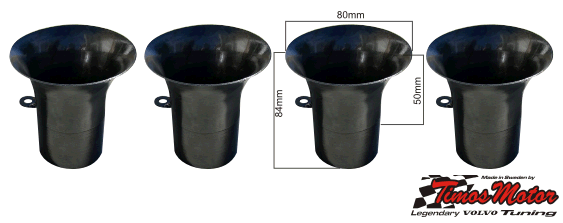
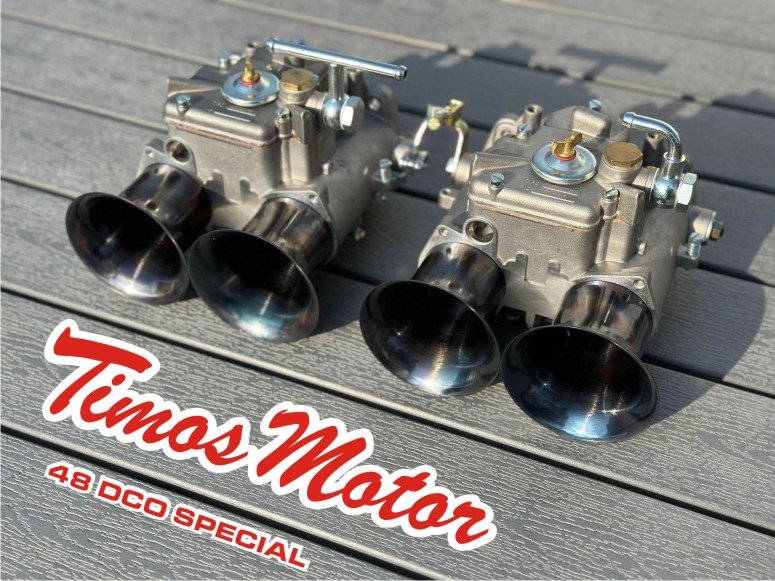
4pcs Timo velocity stacks Weber Fajs DCO 48-50-55
Price1 200,00 kr
In stock
Weight: 1,5 kg · Dimensions: 40 × 30 × 15 cm
Product description
Timo Insert Velocity Stacks – Version 2.0
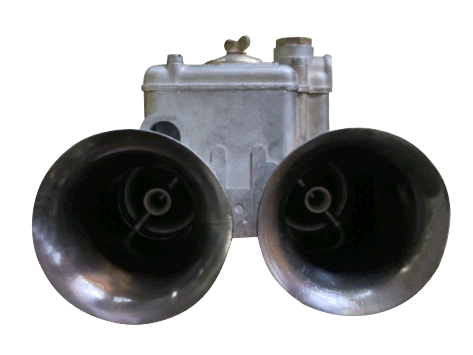
Custom-designed Timo insert velocity stacks, developed with a hyperbolic radius and a diameter as large as possible while still allowing them to fit as a pair, approximately 90 mm. They were developed to solve a problem we have seen many times with these carburetors: the intake area is simply too large for many 2.3- and 2.5-litre engines.
The problem is most noticeable at low and mid-range rpm, but the low air velocity follows the engine further up the rev range and the engine may not begin to recover until around 5000 rpm. When the engine is not consuming large amounts of air, the air velocity through the large cross-sectional area becomes too low. The result is a weaker fuel signal, more difficult jetting and an engine that simply does not respond or perform as it should.
The larger the opening the air has to pass through, the lower the air velocity will be at the same airflow. This is why a 45 DCOE can often produce a more driveable engine.
Inspired by the old Weber 48 DCOE
In the past, Weber produced a 48 DCOE with essentially the same casting and external dimensions as today’s Weber/Fajs 45 DCOE, but with dimensions that worked extremely well on this type of engine.
This is where the basic idea behind the Timo velocity stacks comes from.
The stacks reduce the effective cross-sectional area and provide dimensions very close to those older, legendary 48 DCOE carburetors. The aim is to increase air velocity and thereby create a stronger and more stable fuel signal through the carburetor.
Developed and tested on real engines
The first design was Version 1.0. After further development, this is now Version 2.0.
The stacks have been tested on 2.3-litre engines, 2.5-litre engines and a 2150 cc rallycross engine, both on the dyno and in actual competition.
The result has been the same on all of the engines: air velocity increases significantly, the fuel signal starts working as it should and the engines can be run with considerably more normal jetting.
Most importantly, driveability and throttle response return.
Bigger openings do not automatically mean a faster engine
There is an old belief that a larger intake area automatically means more horsepower and torque. There is of course some truth to this, as an engine needs sufficient cross-sectional area when airflow demand becomes very high at high rpm.
But a competition engine is not driven only at the point where peak power is measured.
In heat racing, for example, we obviously want the engine to continue pulling hard and making power beyond 7200–7500 rpm. But almost even more important is how quickly the engine recovers when you get back on the throttle coming out of the first corner. If the engine loses ground there, what it produces at the very top of the rev range matters much less – the pack behind you is already catching up.
That is exactly where the Timo velocity stacks are designed to do their job: retain the airflow capacity where it is needed, while increasing air velocity, improving the fuel signal and reducing turbulence so that the engine responds and pulls strongly throughout the entire rev range actually used on the track.
MORE FOR YOUR VOLVOCUSTOMERS ALSO BOUGHT
VIEW ALL PRODUCTS →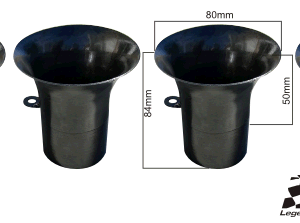
Intake manifolds & accessories, Luftfilter & trattar
4-Piece Timo Intake Trumpet Set Weber / FAJS DCOE 45995,00 kr→
Intake manifolds & accessories, Insugningsrör, Trimkit Volvo, Volvo LH2.4 240 / 740 / 940, Volvo tuning
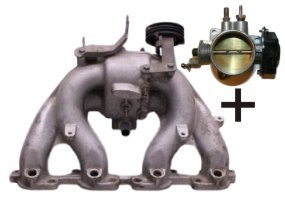
Modified Intake Manifold with 59.5 mm Throttle Body Volvo 240 / 740 / 9401 795,00 kr→
Bränslechip, Intake manifolds & accessories, Trimkit Volvo, Volvo LH2.4 240 / 740 / 940, Volvo tuning
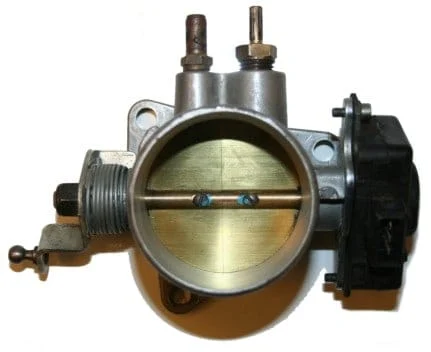
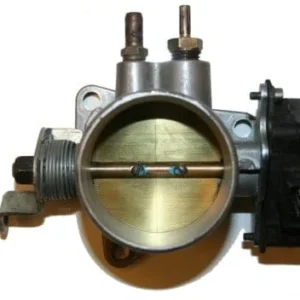
Performance Throttle Body Volvo 240 / 740 / 940 Special1 000,00 kr→
Intake manifolds & accessories, Insugningsrör
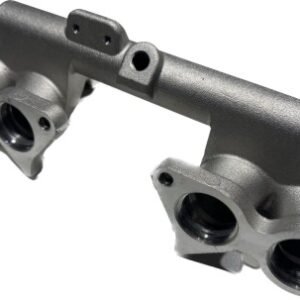
Intake manifold Volvo B18B sport B20 double SU carburators796,00 kr→
Related products
-
 Bränslechip
Volvo Tuning Chip – Performance Throttle Body Volvo 240 / 740 / 940 Special
1 000,00 kr -
 Intake manifolds & accessories
Modified Intake Manifold with 59.5 mm Throttle Body Volvo 240 / 740 / 940
1 795,00 kr -
 Intake manifolds & accessories
4-Piece Timo Intake Trumpet Set Weber / FAJS DCOE 45
995,00 kr -
 Intake manifolds & accessories
6-Piece Timo Intake Trumpet Set Weber / FAJS DCOE 45
1 495,00 kr